How Cell Therapies require New Change

https://www.cnbc.com/2019/05/17/commentary-novartis-ceo-says-gene-therapies-to-upend-us-health-system.html

More than often, Cell therapies now offer a new way of treating diseases. What was once a chronic disease treatment that was paid using “fee for service” models, we now have cell therapies which would be an upfront cost that could effectively completely treat a disease and create incredible value for patients. This could include a literal lifetime. A lifetime of health, sight, or one without chronic pain. How do insurance companies go about evaluating the cost of these new treatments? There have already been suggestions such as a payment plan or paying only if the treatment works.

(Question: why isn’t this viewed almost as a vaccine? Yes it is a specialized treatment that requires specialized preparation but at the end of the day, much like a vaccine, it is a one time treatment that stops a lifetime of disease? Vaccines seem to already have value. However, I do see the problem as this makes orphan diseases pretty much non-commercializeable considering how little vaccines cost. As mentioned previously, in comparison with biologics, vaccines bring in very little. The true goal is to create value for shareholders with this new technology.

https://www.nature.com/articles/s41434-019-0074-7

This is another article that mentions this in a similar vein. I throughly enjoyed this article because it jumped into the patient journey and the necessity to change how physicians work together with other stakeholders in the provider system to give care to patients. Clearly many hospitals have yet to design their systems to accommodate for cellular therapy patients. This creates an issue with clinical trials. Often times cellular therapies target smaller populations as they target specific genes but can do so in ever so slgihtly different ways. How can they get patient recruitment to sites that are unready and how can they become commercializable with a small trial? The article argues for a new way to perform clinical trials for cell therapies that follows more of the “medical device model”. As we know how cell therapies work, their testing should be on the gene known rather than the overall “cell therapy” model.
Refueling Innovations in Vaccines

Instead of commenting on an article, I’d like to take a couple steps back to focus more on industry trends. The purpose is to summarize the article and ask questions about what I may not understand and question consequences of particular actions.

The article mentions that vaccine innovations have had a recent slowdown. This has resulted in a lower number of vaccines that make it through to the market and McKinsey has boiled it down to three primary reasons.

  1. Investment requirements for mid and late stage RnD & manufcaturing
  2. Opportunity cost as economics converge with Biologics
  3. Higher techincal complexity and commercial uncertainty.

So what does “Investment requirements” mean? There has been increase in scrutiny amongst more complex products with longer timelines for vaccine approval. This makes these investments less lucrative. As there are preventive in nature, vaccines require a higher bar for quality and safety. (Question: what kind of higher bar are we talking about that biologics don’t already go through? I’m a bit hazy as to the development process for these).

As for the opportunity cost, this one is a bit more clear. If it takes longer to get to market, your runway for making money decreases. Furthermore, as it is a one time use product, you constantly shrink your market once the initial batch is captured. Prevnar saw 6B in sales during its peak but this pales in comparison with how much blockbuster biologics have made. Hence, it does not make sense to invest in vaccines. Now, vaccines must be specific in the people they target. McKinsey has 5 “archetypes” for vaccine innovation. High income areas would benefit from vaccines that include healthcare acquired infections as these have an enormous burden on the markets. Potential blockbusters target a large patient pool but also must be in high income areas. Targets include hepatits C and HIV. Treamtent is a bit hazy although McKinsey admits it is not too feasible. Incremental improvements on existing vaccines is not too innovative and it is questionable how much the company could demand on price. Emerging threats could target diseases we could see in the future but their markets are unknown and the value to payers is also unknown. Low income markets simply have moderate potential for commercialization and the feasibility against malaria or TB is Low-Moderate.

Lastly, newer vaccines will require higher technical complexity that will go beyond simple antigens. Newer vaccines will utilize new mechanisms of action such as RNA silencing and questions regarding the long term effects will always remain. For patients, the path for getting treated also is filled with roadblocks which gets clogged up with a physician’s perception and knowledge, whether the doctor recommends it, whether the patient will continue onto the pharmacy, whether the patient wants to pay for it etc. By the time we have counted the number of people who have gotten the vaccine, it could be incredibly low.

The argument that there should be government incentives that help private industry could be helpful. However, once this occurs, the public will demand that they be released at a price that does not help shareholders. This creates disincentive for them to pursue commercialization of a new vaccine because it creates no true value for their company. People do not understand NPV or WACC, without which there would be no products.

ResMed’s Acquisition of Propellor

Propeller: This company has created a cloud-connected inhaler that looks to monitor those with COPD and Asthma.

ResMed has many respritory products that it has in its porfolio that deal with respritory issues including COPD, Asthma, Sleep Apnea… ResMed has made it a mission not to be exclusive with a single pharmaceutical firm as to not be viewed as a threat. Thus, they are viewed more as a Neutral good that looks to help all companies establish a standard of treatment in an increasingly digital world.

When this company first was released, it the pharmaceutical companies showed some interest. Today, it seems that being connected with the patients is standard. As I do not have Asthma, i wonder how many people actually use digital devices in order to monitor their chronic diseases such as Asthma or Diabetes.

Propeller will act as an independent company from ResMed (why acquire then if you see no synergies? Is it just to utilize ResMed Technology in their own products or to own the respiratory field?) and they have a partnership with Walgreens to facilitate the re-filling process for inhalers.

Baselga Takes AstraZeneca’s Cancer RnD

Story:

https://www.fiercebiotech.com/biotech/baselga-takes-helm-astrazeneca-s-cancer-r-d-as-pharma-rings-new-year-big-changes

Baselga is a person apparently who used to work at Memorial Sloan Kettering. This physician was accused of not disclosing all of the payments he was receiving from pharmaceutical companies, admitted to wrongdoing and was ultimately terminated.
He now lead’s Astra Zeneca’s Oncology team as AZ has not been able to come up with strong cancer products for years. AZ’s most recent failure was that for a NSCLC molecule, an a-CTLA4 molecule that failed phase 3. Since Merck and BMS had beat AZ to the PD-1/PDL-1 punch, the hope was a dual therapy using both the a-CTLA4 and PDL-1 would be able to yield better clinical results.

BMS had some limited success and got the FDA nod for the dual therapy for a variety of indications. However, AZ has not been so lucky as they failed for head and neck cancers and they speculate that their aCTLA4 actually intereres with their PDL-1 antibody. The dual therapy did not outperform the current standard chemotherapy treatment. However, they are testing for a wide variety of indications and but things do not look optimistic for them.

https://www.fiercebiotech.com/biotech/astrazeneca-s-tremelimumab-fails-another-phase-3-cancer-trial

CRISPR: The promise of Gene Editing

https://www.fiercebiotech.com/research/crispr-controls-obesity-mice-by-amplifying-rather-than-editing-genes

The promise of CRISPR technology has been incredibly promising. Recently in China, a scientist has claimed to create two girls who are resistant to HIV. Why he created this kind of human seems a bit unethical as the only way to test if they’re actually resistant is to expose them to the virus. Furthermore, we have no idea of the health problems they may face in the future. I’m in consensus with the scientific community that CRISPR-Cas9 is not yet established enough to understand what repercussions may lie in wait for transgenic humans. 

However, this new kind of method put me a bit more at ease. Instead of cutting out DNA that was broken, it looked to target the non-coding regions before a gene that was not being amplified enough, and give it a new promoter that can help increase the translation of certain proteins. In this case, it was a protein that tells people that they are full and no longer need to eat. This can be used to place in more restrictive promotors or target more upstream genes. Ultimately, there is so much promise currently behind CRISPR that many companies and countries are looking to capitalize. Often times it is much better to take the risk with CRISPR than to lead a life with a chronic and debilitating disease.

Initial trials on mice at UCSF showed that the mice who were gene edited did not gain as much weight as the mice who had broken genes. Once again, the human body is a maze of cascading systems. Rarely do we have silver bullets that do not effect another part of the body. This may work for humans but we should be on the looking for any lingering effects down the line. I absolutely love how genetics and science has gotten so far but I question those who have shoddy ethics and not take the proper steps. I question how we can begin creating crafted humans. Will creating humans resistant to disease lead to an increase in autoimmune diseases or allergies due to a bored immune system? How will we set up trials for gene edited humans as these people who arent even born yet are not ill? 

Oral Biologics- Pipe Dream Technology Platform?

Today’s Article: https://www.fiercebiotech.com/biotech/amgen-teams-entera-to-develop-oral-biologics

It has been well known that biologics such as antibodies are not taken orally because they would be destroyed by our stomach acids and even if they made it through, these molecules are far too big to be absorbed properly. Enter Entera. This company is looking to promote that it can have peptides that neutralize digestive enzymes and also can tag molecules so that they can be more readily absorbed into the body. This seems like a tall order and the company has already failed a couple times at it. So the question arises: “why would Amgen choose to partner with Entera”. Of course, if any of their products actually worked, this could be a great idea as Amgen has a heavy focus on an incredible number of biologics. If it worked, I could see Amgen simply acquiring Entera and then selling generics with Entera to have an entire portfolio of edible antibodies.

I’m already incredibly skeptical as if Entera had truly breakthrough technologies, all of the companies would be lining up. Amgen has partnered with 3 molecules but it is mentioned that is probably not the one related to bone density (therefore it is probably not Prolia). 

Funding for a migraine drug taken via nasal delivery

Today’s article: https://www.fiercebiotech.com/biotech/impel-raises-67-5m-as-it-eyes-filing-for-nasal-migraine-drug

So Impel has managed to raise additional money for a delivery system that is called “POD” or Precision Olfactory Delivery. They look to deliver neurology drugs that already exist. Currently, the company is looking into Parkinsons and Migraines. The idea is fairly interesting. The machine pretty much turns the liquid into a gas so it can get into the upper nasal area where blood vessels are so it can be easily absorbed rather than swallowed. Furthermore, as it is a gas, they do not need to do any snorting. Currently, there are nasal delivery migraine products but they have a history of taking a while to begin to work.

As this is actually a medical device, it would seem that they can easily ride through. However, I don’t see any innovation in using DHE as this seems like something that has been used for a while and is somewhat industry standard. DHE needs to be consistently taken while the new products like Aimovig or Ajovy can be taken once a month and have no side effects. Furthermore, this is in an injectable pen so it makes me curious how this company intends to steal business from Amgen or Teva. 

Questions:
How do doctors go about prescribing medication for those on migraines? Are there different severity of it and does it become progressively worse if gone untreated? What are the different targets that DHE goes for versus sumthing like Aimovig? What kind of promise did the investors see in this product in terms of the migraine market? Why doesn’t this company look to partner with companies that find their products difficult to pass through the blood-brain barrier? I can’t tell if I simply don’t understand their goals as much or if they are not aiming to make a best in class product that can beat out what is the current standard of care.

Gilead, NASH drug Development with new Phase 3 FDA Rules

Todays Article: https://www.fiercebiotech.com/biotech/gilead-and-rivals-deep-phase-3-fda-unveils-draft-guidance-nash-drug-development

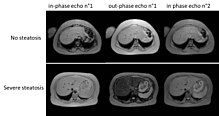
So I was first a bit hazy as to what NASH Drugs are: NASH (Non-Alcoholic Steatohepatitis). Essentially the disease is as such: lipids accumulate in vesicles displacing the cytoplasm, displacing the nucleus and severe versions cause the cells to burst. A person’s inability to process lipids is what can cause this. This can stem from diabetes, protein malnutrition or obesity. As we commonly think of the liver when it comes to processing fat, this is where we can see the effect the most heavily generally: 

Pictures of Livers without steatosis and with.

The progression of the disease starts with steatosis. It is generally isolated to an organ. It then can progress to over decades into steatohepatitis and then eventually lead to cirrhosis (scarring and destruction of liver tissue). As of writing this, there are currently no treatments for NASH. There is a high prevalence of NASH, and high morbidity from this disease. It is difficult to get liver transplants as well so this medicine could make great strides for those who suffer from NASH.

So what did the FDA say anyway? Full Text
They made new regulations for what they expect from the Phase II and Phase III Trials. Some companies are currently in Phase II and Some companies are in Phase III. So what are the expectations?

Recommendation:
Attach a biomarker to the drug. People don’t like biopsies as they are invasive and can often lead to morbidity. It’d be nice to have an easy way to track the drug through some kind of biomarkers and accelerate drug development into NAFLD.
Phase II: 
Pick a patient population that will be represented such as those who have Diabetes. Testing out more dosages may allow them to combine phase 2 and 3. The clinical trials should last 12-18 months. Anything shorter should be explained why it was so short.
Phase III: 
If the product can be fast-tracked if it can reduce the NASH level or and not worsening on fibrosis and an improvement of one level of liver fibrosis.

Key Players in Phase III Trials

Allergan, Genfit, Gilead, Intercept Pharmaceuticals: 
These 4 comapnies have already satisfied many of the FDA requests for acceleration

Key Players in Phase IIb Trials (Testing for dosage)

BMS, Inventiva Pharmaceuticals.

There companies look to fulfill what the FDA asks of them in Phase IIb studies as the FDA has shown skepticism for the time periods that the previous companies had spent on their clinical trials. The FDA expects a longer trial period.\

Novartis

Paid 50 million for Conatus and it failed Phase 2b

My thoughts and lingering questions (hopefully I’ll learn more in time to come)
This seems like a great untapped field for the companies to tap into and it seems to fit in nicely with many drug portfolios. This product is an FXR agonist so I assume that it may be some kind of antibody? Considering there is no current treatment for NASH, it makes me wonder what the costs will be and who will come out ahead. Even the late players like BMS can still have an advantage and it truly speaks to the marketing teams that will be on the job to sell the different value propositions to physicians. This looks great as a product that can help turn this disease into more of a “chronic condition” if not eliminate it all together? I’m unsure about the endpoints for the patients. Do the patients have to keep taking the products? With so many players entering the market, I wonder which ones will have the best efficacy, which ones will have dominance in the market, how physicians will choose between the molecules. The article does mention that Allergan’s is slightly different than Gilead’s but I’m still unsure of how.

As this was my first piece, it actually took me a while to read through everything, understand it vaguely and write about it. I hope future pieces will show a bit more thought and depth as i learn more about the industry.